
Creating a sustainable garden is more than just a trend; it’s a lifestyle choice that connects us to nature. I put this post together because I’ve been inspired by the beauty of natural rock landscaping. It has this amazing way of blending with the environment, creating spaces that feel both serene and alive. If you’re someone who values eco-friendly gardening and loves outdoor aesthetics, this is the perfect read for you.
Inside, you’ll find nine creative and sustainable rock landscaping ideas that enhance your garden’s charm without compromising the planet. These ideas are not just visually appealing; they also help conserve water and support local ecosystems. From serene dry riverbeds to stunning vertical rock gardens, you’ll get practical tips that are not only easy to implement but also resonate with the beauty around you. Let’s dive into the natural world of rock landscaping and discover how to make your garden a peaceful retreat.
Key Takeaways
– Explore Variety: Discover nine unique ideas for natural rock landscaping that can transform your garden into a stunning outdoor space.
– Sustainable Practices: Learn how rock gardens and features contribute to eco-friendly gardening and reduce water usage.
– Aesthetic Appeal: Understand how incorporating natural stone features enhances outdoor aesthetics, making your garden more inviting.
– Practical Tips: Find actionable advice on designing features like eco-friendly pathways and vertical rock gardens that increase functionality.
– Creative Solutions: Gain insights into using rocks for mulching and fire pits, providing warmth and texture to your garden while promoting sustainability.
1. Serene Dry Riverbed

Imagine transforming your garden into a tranquil retreat with a dry riverbed. This design not only catches the eye but also efficiently channels rainwater runoff, promoting sustainability. By utilizing larger stones alongside smaller gravel, you can create a natural flow that draws attention while providing a habitat for local wildlife. Plus, planting native flowers or succulents along the banks enhances beauty and reduces the need for additional watering.
Begin by selecting stones that are locally sourced to minimize environmental impact. Aim for gentle curves in the riverbed to create a more organic look. Incorporating drought-resistant plants will ensure your landscape thrives with less water.
Key elements for a stunning dry riverbed:
– Choose a mix of stone sizes for visual interest.
– Arrange plants for seasonal blooms and color.
– Incorporate gravel for effective drainage and maintenance.
This design invites peace and harmony into your outdoor space, making it a perfect escape.
Did you know a well-placed dry riverbed can reduce rainwater runoff by up to 40% in a water-smart garden? With natural rock landscaping, pairing larger stones and native plants creates a serene retreat that’s both practical and pretty.
Serene Dry Riverbed
Editor’s Choice



YISZM 2LB Succulent and Cactus Gravel Pebbles, 1/5 Inch Natural Decorati…

Natural River Rocks-5 lbs of Pebbles and River Stones,2-3 Inch Plant Roc…
2. Rock Garden Design
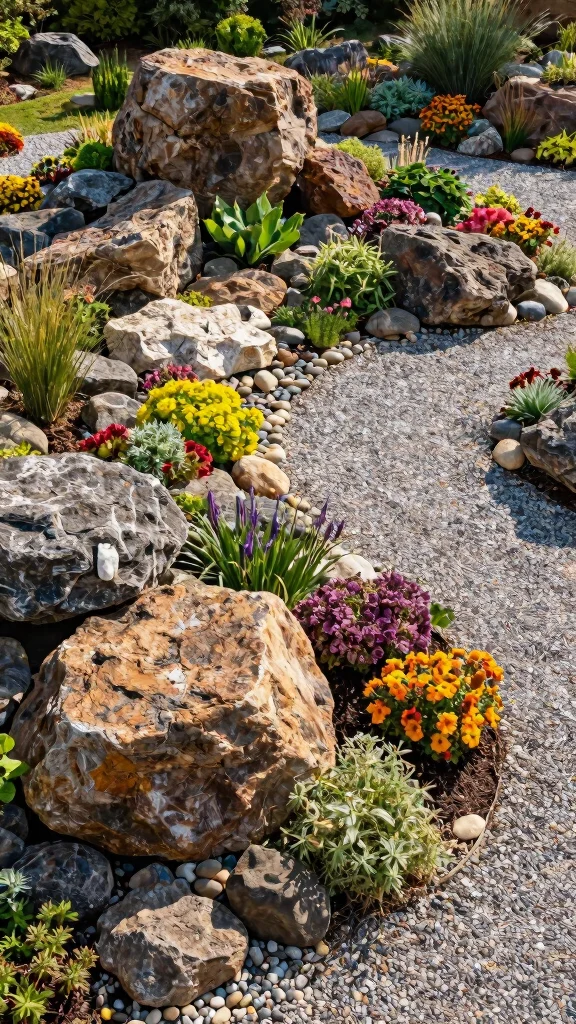
Rock gardens are an excellent choice for adding natural charm to your outdoor space. They are not only beautiful but also require minimal upkeep, making them a smart landscaping option. By mixing different rock sizes with drought-tolerant plants, you can create a stunning display that thrives even in dry conditions. Arranging rocks in clusters adds depth while selecting perennials ensures year-round vibrancy.
To enhance your rock garden, focus on plants that bloom in various seasons for a continuous palette. Using smaller stones and gravel fills gaps effectively and adds texture. Larger boulders can serve as striking focal points, drawing the eye throughout the space.
Essential tips for your rock garden:
– Choose a variety of plants for diverse seasonal colors.
– Incorporate smaller stones for texture and interest.
– Position larger rocks strategically for visual appeal.
This design can transform any area into a captivating landscape that celebrates the beauty of nature.
📹 Related Video: 50+ Inspiring Rock Garden Ideas for Your House!
Rock Garden Design
Editor’s Choice

Royal Imports 5LBS River Rocks Decorative Ornamental Pebbles, Garden Lan…
50 pcs Lantana Flower Seeds – Colorful Perennial Seeds | Drought-Toler…

ZOOFOX 10lb Natural Rocks Stones, Small Washed Gravel for Terrariums, Su…
3. Natural Stone Features

Incorporating natural stone features like walls or seating areas can significantly enhance the allure of your garden. These elements not only provide structure but also harmonize beautifully with the surroundings. Using locally sourced stones supports sustainability and showcases your region’s natural beauty. A stone bench invites relaxation, while a wall can host climbing plants that infuse life into the landscape.
When planning your stone features, align the stone type with local geological formations for a cohesive appearance. Opt for earth-toned mortar to complement the stones naturally. Adding greenery such as flowering vines softens the hard edges, creating a welcoming atmosphere.
Consider these tips for effective stone integration:
– Match stones to local formations for a unified look.
– Use mortar that blends with the stone colors.
– Add plants to create a softer, inviting space.
Thoughtfully placed stone features can turn your garden into a serene retreat, inviting enjoyment and relaxation.
Did you know that natural rock landscaping with locally sourced stones can reduce heat around paths by up to 15%? Stone walls and seating create cool microclimates and invite longer outdoor moments, while climbing plants add living texture.
Natural Stone Features
Editor’s Choice
2 Pack 30 Inch Taller Plant Trellis for Potted Climbing Plants Indoor,Ex…

Emsco Group 2306-1AZ Garden Bench – Natural Sandstone Appearance – M…
4. Eco-Friendly Pathways

Creating pathways with natural rocks is a stunning way to guide visitors through your garden while promoting sustainability. These paths enhance the beauty of your outdoor space and allow for natural drainage, minimizing water runoff. By using flat stones or pavers for stepping stones, you can add character and create a sturdy walking surface. Surrounding these pathways with ground cover plants or native grasses integrates them seamlessly into the landscape.
Keep in mind to vary the size and shape of stones for a more organic feel. Consider incorporating gravel as a filler to support drainage and reduce weeds. Adding lighting along the pathways enhances safety and creates a warm ambiance in the evening.
Here are some ideas for your eco-friendly pathways:
– Choose diverse stone sizes for a natural appearance.
– Use gravel to improve drainage and prevent weeds.
– Install lights for safety and a cozy atmosphere.
With thoughtful design, your pathways can become delightful features that unify your garden’s elements.
Eco-Friendly Pathways
Editor’s Choice

Outsidepride Perennial White MiniClover Seed – 1 lb. Dwarf, Small-Leaved…
YISZM 2LB Succulent and Cactus Gravel Pebbles, 1/5 Inch Natural Decorati…

4Pcs Large Stepping Stones Outdoor Garden Walkway, Durable Plastic Paver…
5. Rock Borders and Edging

Using rocks as borders around garden beds creates a defined edge that keeps plants in place while adding visual interest. This straightforward yet effective technique enhances the overall look of your landscape and supports sustainable gardening practices. Natural stones can be arranged randomly or stacked at different heights, allowing for unique designs that reflect your garden style. Additionally, these borders help retain moisture and control weeds, combining functionality with beauty.
For effective rock border designs, focus on selecting stones with varying sizes and textures for dynamic appeal. Choose local stones that resonate with the natural environment to ensure cohesion. Planting perennial flowers or low-growing plants along the edges adds vibrant color and liveliness.
Key elements for beautiful rock borders:
– Mix stone sizes for a lively design.
– Use local stones for a cohesive look.
– Add colorful plants along borders for extra flair.
Rock borders enhance your garden’s beauty while serving practical roles in maintaining a healthy landscape.
Rock Borders and Edging
Editor’s Choice

Large River Rocks for Landscaping, 3-4 Inch Mixed Colors Pebbles for Pla…

FANTIAN 40 lbs Large River Rocks for Outdoor Landscaping, 2-3 Inch Natur…

Pulovin 20 lbs River Rocks for Landscaping, 2″-3″ Natural Rocks for Aqua…

YISZM 20lbs Natural River Rocks, 3″-4″ Premium Pebbles for Garden and La…

20-Pack No Dig Garden Edging Borders,20FT Plastic Lawn Edging with Spike…
You might also like

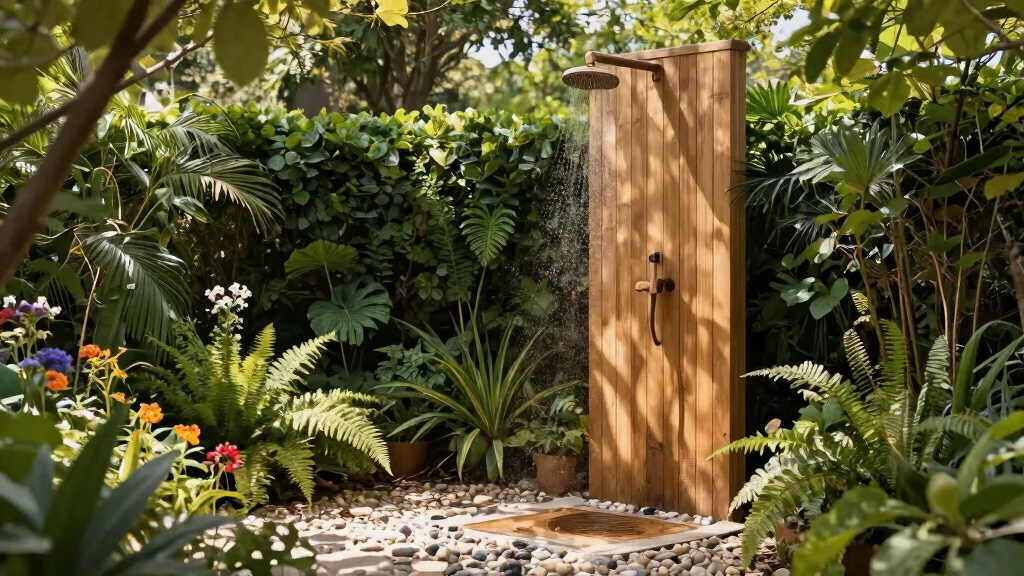
6. Natural Stone Fire Pit

A natural stone fire pit can become the heart of your outdoor area, perfect for gatherings or cozy nights under the stars. Constructing a fire pit from unpolished stones not only enhances rustic appeal but also aligns with eco-friendly practices. Position the fire pit amidst comfortable seating and surround it with native plants to create a warm, inviting atmosphere. Remember to keep flammable materials away and consider the wind direction for safety.
When designing your fire pit, select larger stones for the exterior to safely contain the fire. Incorporating gravel around the pit aids in drainage and adds aesthetic appeal. Mix in seating options like log benches or stone chairs to maintain a natural vibe.
Important considerations for your fire pit:
– Use large stones for safety and containment.
– Add gravel for drainage and decoration.
– Include natural seating options for a cozy gathering spot.
A natural stone fire pit fosters warmth and community, making your outdoor space enjoyable throughout the year.
Natural Stone Fire Pit
Editor’s Choice

10 Pound Fire Pit Glass 1/2 Inch Reflective Round Fire Glass Drops Beads…


Outdoor Wicker Adirondack Chairs Set 2 Rattan Fire Pit Chairs Oversized …
7. Vertical Rock Gardens

Vertical rock gardens offer a creative way to maximize space and add visual intrigue to your outdoor setting, especially when ground space is limited. These gardens turn rock walls into stunning displays for plant life. By installing shelves or pockets in the rocks, you can create layers filled with vibrant plants that add color and texture. Climbing plants can also thrive on vertical structures, filling space and enhancing depth in your garden design.
When creating your vertical rock garden, choose drought-tolerant plants for easy maintenance. Use a mix of stones and soil pockets to achieve an organic appearance. Train plants to grow against the rocks for a wild, natural look that captivates the eye.
Key tips for a successful vertical rock garden:
– Opt for drought-resistant plants to simplify care.
– Combine stones with soil for a natural effect.
– Encourage plants to climb for added dimension.
Vertical gardens serve as striking focal points, transforming unused areas into beautiful, eco-friendly displays.
How To Choose Natural Rock Landscaping Elements
Tools You’ll Need:
– Measuring tape
– Notepad and pencil
– Level
– Shovel and garden rake
– Wheelbarrow
– Safety gloves
Step 1: Determine Your Design
Start by envisioning how you want your garden to look. Consider aspects such as style, function, and how the rock elements will blend with existing plants and features. Sketching your ideas can help clarify your vision. Think about the size of your space and how much rock you want to incorporate. ✔ Visualizing your design makes the selection process easier.
Step 2: Choose the Right Size
The size of the rocks you select should match the scale of your garden. Large boulders can create a dramatic focal point, while smaller stones can fill in gaps or create borders. Measure areas where you plan to place rocks to ensure they fit well. ✔ A mix of sizes can add texture and depth to your layout.
Step 3: Select Materials
Natural stones come in various types, such as granite, sandstone, and river rock. Each has a different look and feel. Granite is durable and great for pathways, while river rock provides a softer, natural appearance. Consider what materials are locally available and how they will affect your garden’s overall aesthetic. ✔ Local stones often blend better with the surrounding environment.
Step 4: Assess Your Budget
Natural rock can vary widely in price depending on type, size, and where you buy it. Set a budget that accounts for both the stones and any additional materials you may need, like gravel or soil. Look for local suppliers or quarries that may offer better deals. ✔ Knowing your budget upfront helps you avoid overspending.
Step 5: Plan for Maintenance
Think about how you will maintain your rock features. Some stones require more upkeep than others, especially if they attract moss or weeds. Selecting materials that are easier to care for can save you time and effort in the long run. ✔ Regular maintenance will keep your landscape looking its best.
Pro Tip: Consider the overall climate and environment of your area when choosing rocks. Some stones handle heat and moisture better than others. Doing a little research can ensure your selections thrive in your specific conditions.
Vertical Rock Gardens
Editor’s Choice

Umigy 2 Set of 7 Tier Vertical Planter Stackable Tower Planters Strawber…

8. Sustainable Water Features

Integrating water features into your natural rock landscaping not only enriches your garden’s beauty but also supports local wildlife. These features can range from simple ponds to elaborate waterfalls, all crafted with natural stones. A pond filled with native aquatic plants creates a peaceful nature spot, while a waterfall brings soothing sounds and movement to your garden. For sustainability, consider recirculating water systems that minimize waste and foster local ecosystems.
To design your sustainable water feature, use natural stones for an authentic appearance. Include plants that naturally filter the water, enhancing both function and aesthetics. Keep maintenance simple by selecting low-water plants and ensuring proper drainage.
Ideas for your sustainable water features:
– Use natural stones for a rustic look.
– Incorporate plants for natural water filtration.
– Choose low-water plants for easy upkeep.
Thoughtful design transforms water features into dynamic focal points that promote tranquility and biodiversity in your garden.
❝Fun fact: A 100–200 liter, recirculating water feature can cut water waste by up to 70% in a sustainable garden. In natural rock landscaping, native aquatic plants and a gentle waterfall create wildlife-friendly beauty with minimal upkeep.❞
You Might Also Like


Sustainable Water Features
Editor’s Choice

Virekm River Rocks, Decorative Ornamental Pebbles,Garden Landscaping Sto…

Watts Heat H2O Hot Water Recirculation System w/Programmable Timer, Inst…

Chalily Arrow Arum, a Great Live Pond Plant for Your Water Garden. Filte…
9. Rock Mulching
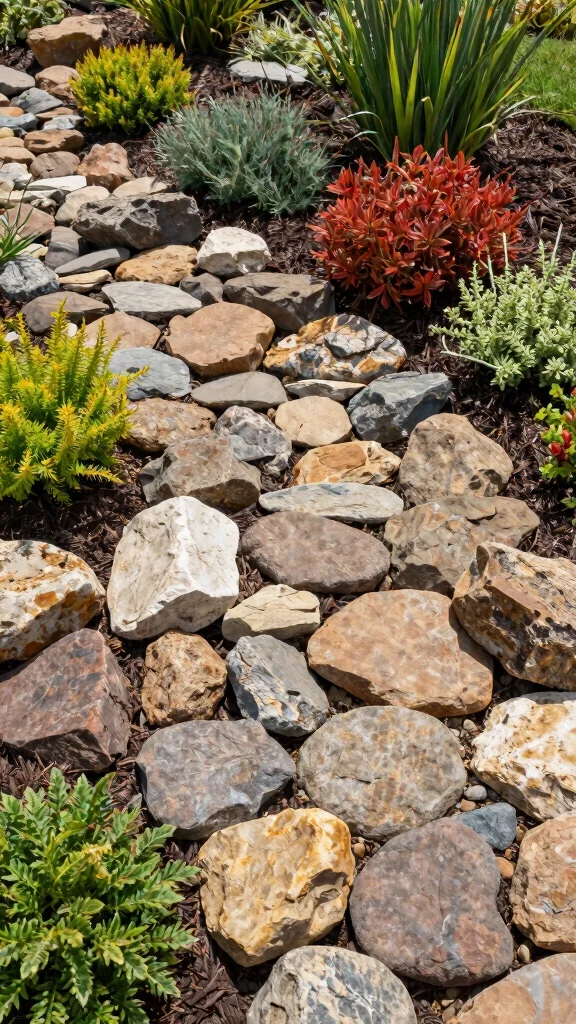
Rock mulching is a unique and attractive way to manage garden beds while conserving water. This method replaces traditional organic mulch with natural stones that help retain moisture, suppress weeds, and maintain a clean appearance. By selecting various sizes and colors of rocks, you can achieve a distinctive look that complements your landscaping. Additionally, rock mulching is durable and long-lasting, making it a sustainable choice for your garden.
When using rock mulch, consider larger stones for borders and smaller stones as infill for a layered effect. Pair rock mulching with drought-resistant plants for maximum efficiency in water use. Regularly check for any weeds that may sprout through the rock to maintain a tidy look.
Tips for effective rock mulching:
– Use large stones for borders and small for filling.
– Combine with drought-resistant plants for efficiency.
– Monitor for weeds to keep beds looking neat.
By adopting rock mulching, you can create low-maintenance garden beds that enhance your outdoor aesthetics while supporting sustainable practices.
Rock Mulching
Editor’s Choice

FANTIAN 40 lbs River Rocks for Landscaping, 1-2 Inch Decorative Stones P…
Conclusion

Natural rock landscaping offers endless possibilities to enhance your garden while promoting sustainability.
From serene dry riverbeds to captivating vertical gardens, each idea is designed to blend seamlessly with the beauty around them. Embrace the unique charm of natural stone features and create your own eco-friendly haven that will thrive for years to come. Let’s celebrate the beauty of nature through impactful design!
Note: We aim to provide accurate product links, but some may occasionally expire or become unavailable. If this happens, please search directly on Amazon for the product or a suitable alternative.
This post contains Amazon affiliate links, meaning we may earn a small commission if you purchase through our links, at no extra cost to you.
Frequently Asked Questions
What is natural rock landscaping and how does it fit into a water-smart garden?
Natural rock landscaping means shaping your garden with real rocks and natural stone features to create texture, structure, and balance with the surrounding environment. It fits a water-smart garden by prioritizing permeable layouts, drought-tolerant planting, and efficient irrigation so you minimize water use while keeping the landscape beautiful.
In practice, focus on natural rock landscaping designs that align with sustainable landscaping, use rock garden design principles, and emphasize eco-friendly gardening habits. The result is enhanced outdoor aesthetics that require less maintenance and water over time.
What practical steps can I take to design a small yard with natural stone features for better drainage and water efficiency?
Start with a simple plan: map sun, wind, and water flow to guide stone placement and plant choices. Choose locally sourced stones to reduce transport and support eco-friendly gardening.
Then design with permeable pathways and open gaps between stones to improve drainage, add raised stone beds for soil control, and connect rainwater harvesting or a drip irrigation system to your planting scheme. Pair the rocks with drought-tolerant plants for long-lasting beauty.
Keep rock garden design principles in mind and aim for a cohesive look that preserves outdoor aesthetics while cutting water use.
What maintenance does natural rock landscaping require to stay stunning without high water use?
Natural rock landscapes are wonderfully forgiving, but a few routine tasks keep them looking their best. Lightly clean stones with a soft brush to remove dirt and moss, and reset joints with sand if you notice gaps. Mulch around plants to reduce evaporation and weeds, and prune to maintain airflow and plant health.
Inspect drainage slopes after heavy rain to prevent puddling, and refresh mulch and compost only as needed. With these simple steps, your natural rock landscaping stays vibrant and sustainable landscaping remains practical for years to come.
Which stone types and color palettes work best to blend with the landscape while staying eco-friendly?
Choose stones that are locally sourced to minimize transport and support eco-friendly gardening. Opt for natural colors—earthy beiges, grays, browns, and warm terracotta tones—that mirror surrounding landscapes and blend with native plants for an effortless outdoor aesthetics appeal.
Mix sizes and textures for depth, and avoid highly polished surfaces that feel artificial. Focus on rock garden design that feels organic and timeless while prioritizing sustainable materials and responsible sourcing.
How can natural rock landscaping support wildlife and promote sustainability?
Rocks create microhabitats for insects, lizards, and hiding spots for beneficial wildlife, while native plants provide food and shelter. Integrate shallow water features and damp microzones to attract birds and pollinators, all within a sustainable landscaping plan.
Consider plant choices that require less water and fertilizer, mulch to retain soil moisture, and avoid chemical runoff. With thoughtful design, natural rock landscapes become thriving habitats that align with eco-friendly gardening goals and enhance natural rock landscaping beauty.
Related Topics
natural rock landscaping
sustainable landscaping
rock garden design
eco-friendly gardening
outdoor aesthetics
natural stone features
beginner friendly
water-smart gardens
landscape design
garden decor
DIY landscaping
seasonal gardening